01
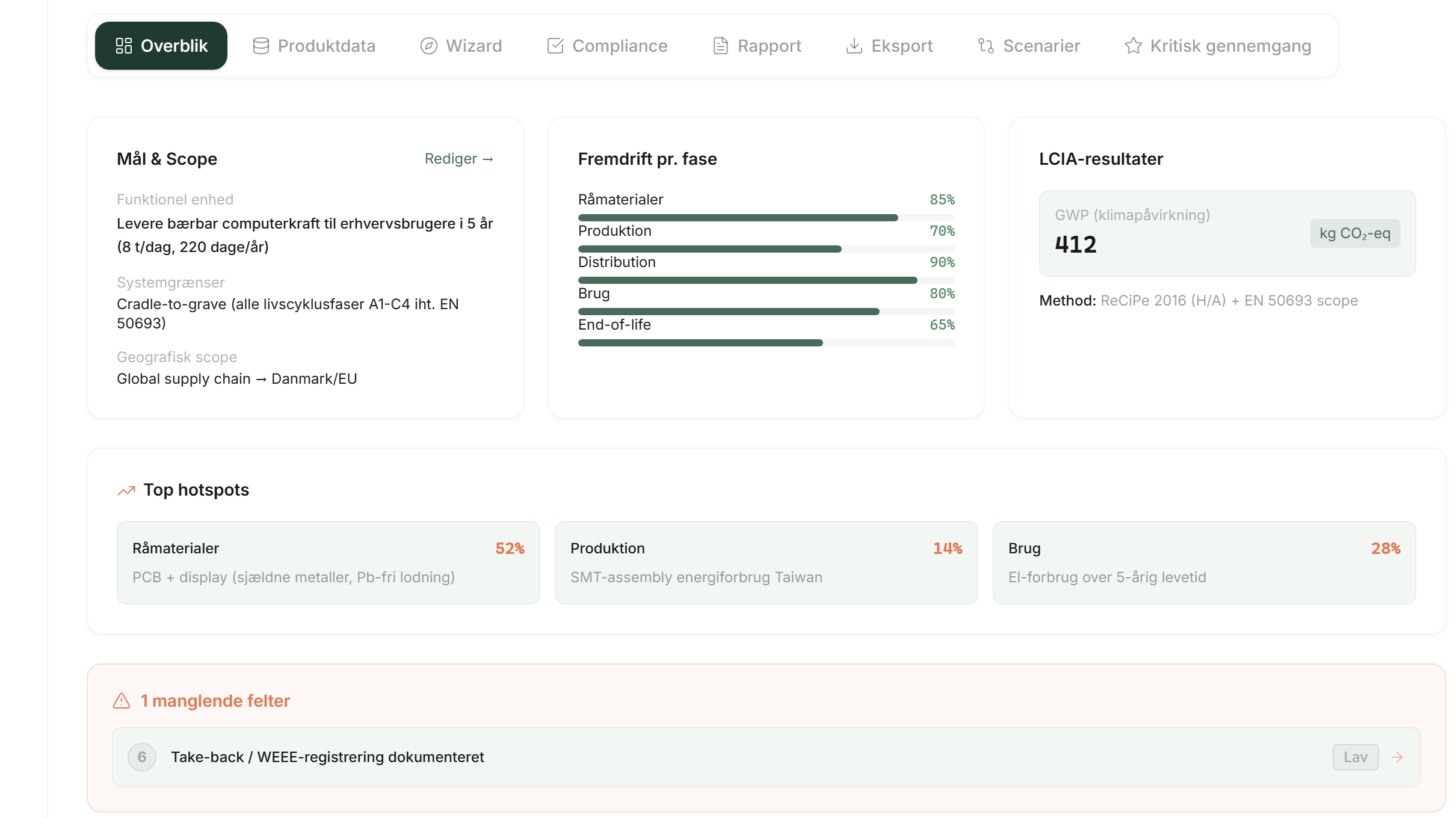
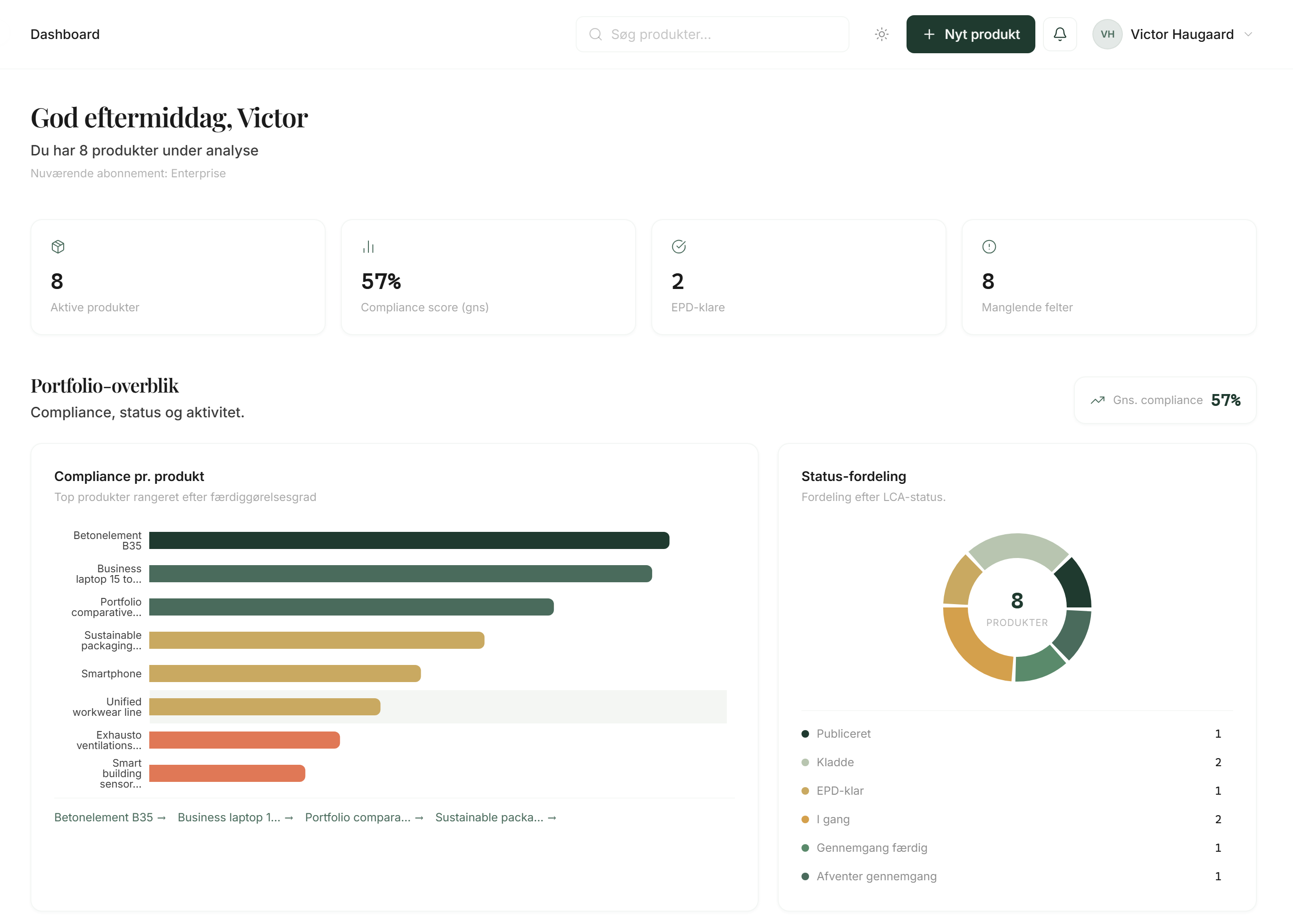
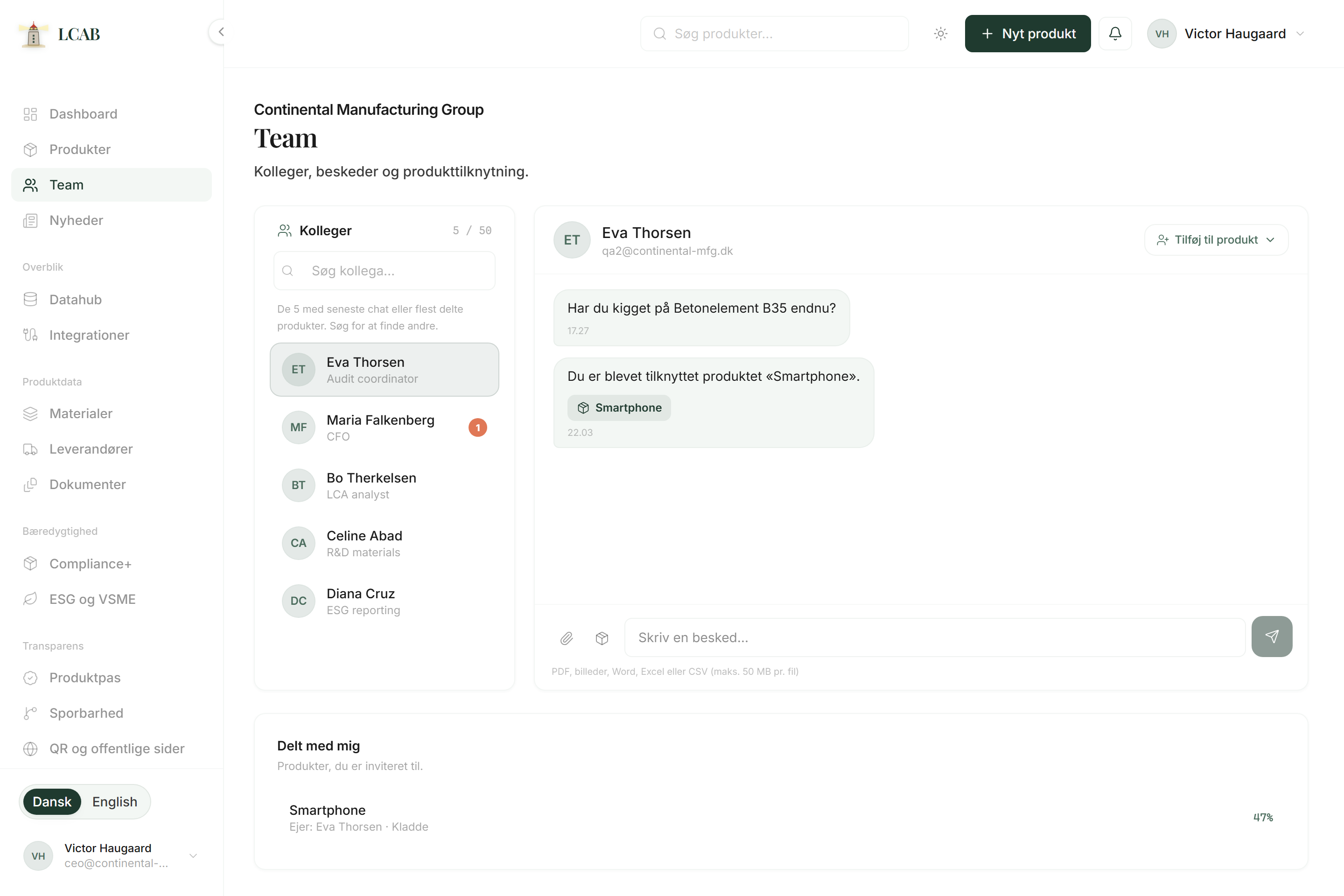
That is where life cycle assessment, shared methods and digital product passports come in. LCAB is where you gather the answer.
LCA
LCA stands for Life Cycle Assessment.
It is an overview of the product environmental impact all the way: materials, production, transport, use and what happens when the product is worn out.
Extraction
Production
Transport
Use
Maintenance
End of life
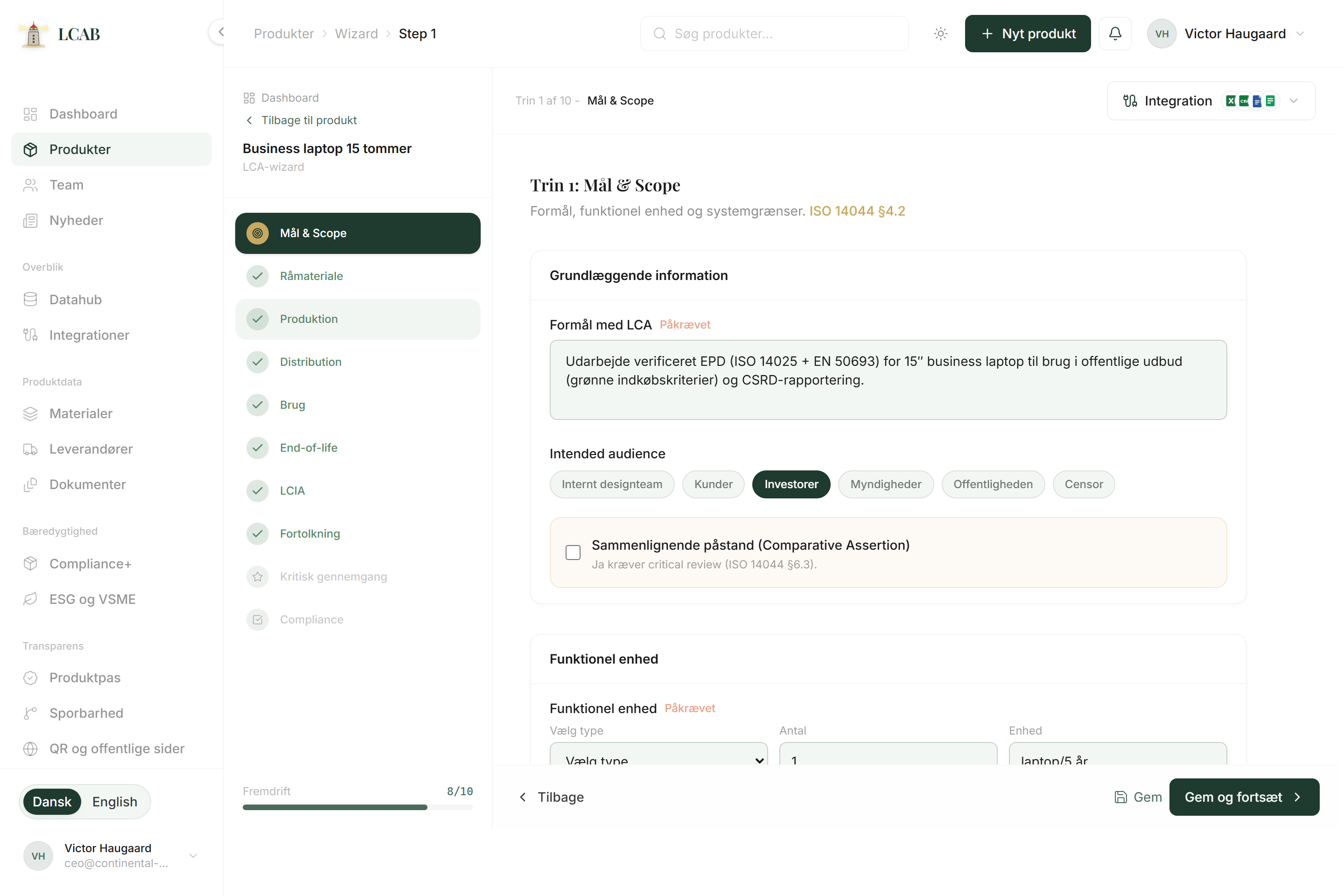
The purpose is to understand where the impact occurs, and where you can improve the product.
The climate figure is often the first thing the customer asks for. An LCA gives you the picture behind the number: materials, production, transport, use and end of life, as far as the data goes.
02
Others because the customer asks for documentation.
03
Some need the figures for ESG reporting.
04
Others want to develop a more competitive product.
What they share is that you can answer when the buyer asks, and see where you can improve the product.
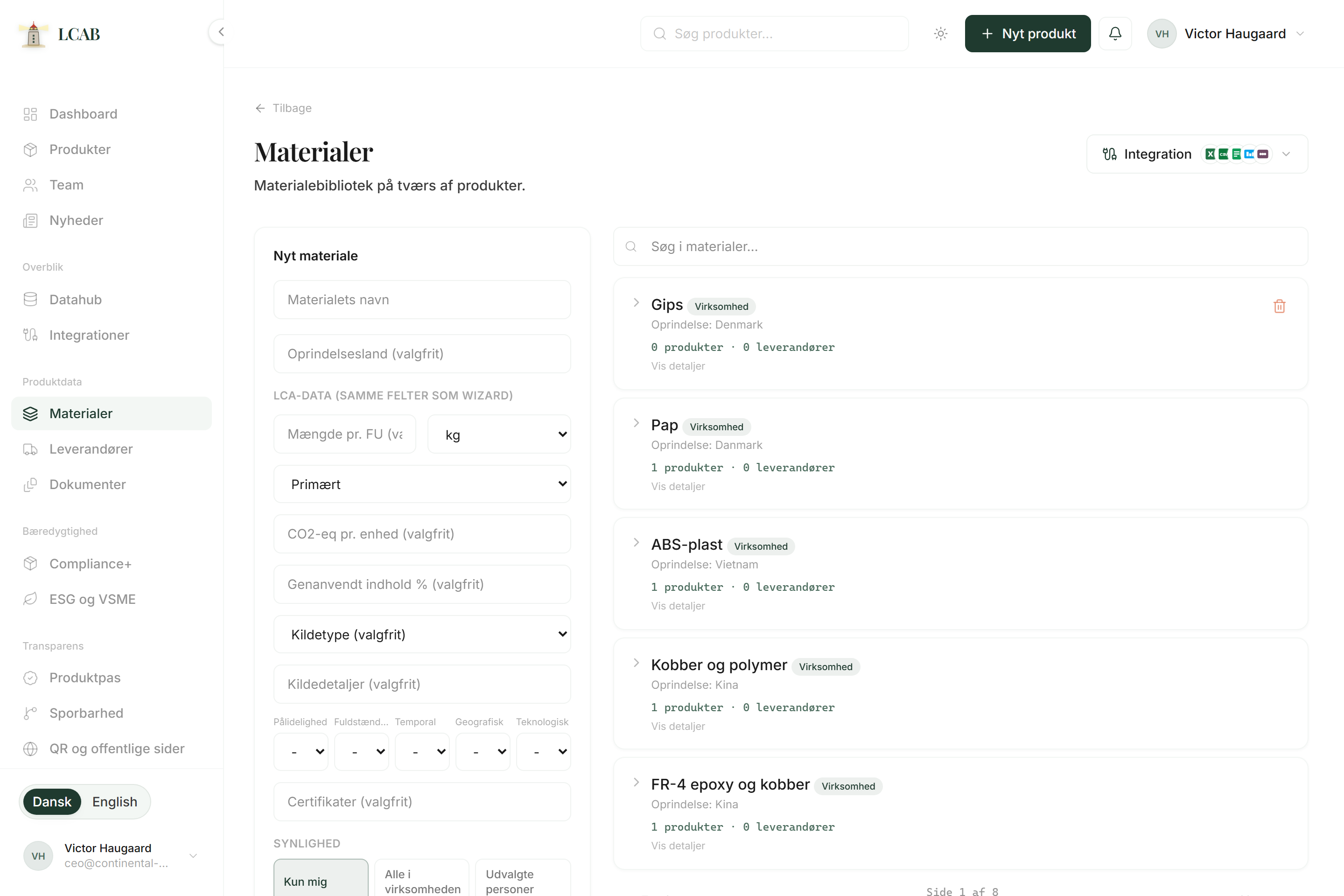
What are the ISO standards?
When working with sustainability, credibility is essential.
If two companies calculate carbon footprint in two different ways, results become difficult to compare. ISO 14040 and ISO 14044 are the international standards that describe how a Life Cycle Assessment should be performed.
01
A systematic method
02
Documented results
03
Transparency in calculations
04
Comparable analyses
They serve as a common language between companies, customers, authorities, and advisors.
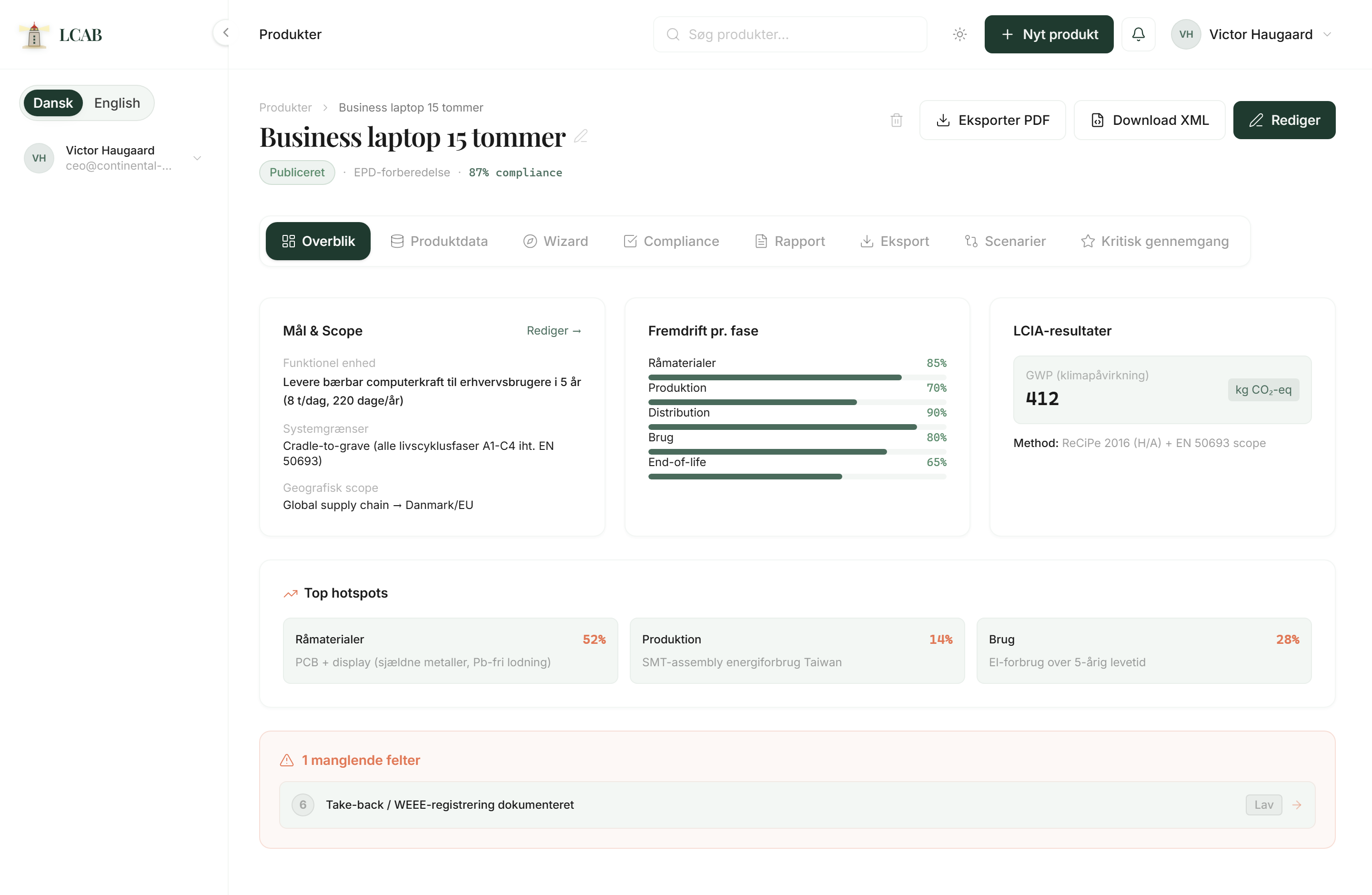
01
Material composition
02
Origin
03
Carbon footprint
04
Repair options
05
Recyclability
06
Certifications
07
Documentation
This makes it easier for customers, businesses, repairers, and authorities to access relevant information.
Why is the EU introducing Digital Product Passports?
The EU wants to create greater transparency around products. Goals include:
01
Reducing resource waste
02
Increasing reuse and recycling
03
Making repair easier
04
Strengthening documentation and traceability
05
Promoting more sustainable products
Digital Product Passports are therefore a central part of the EU's work on the circular economy.
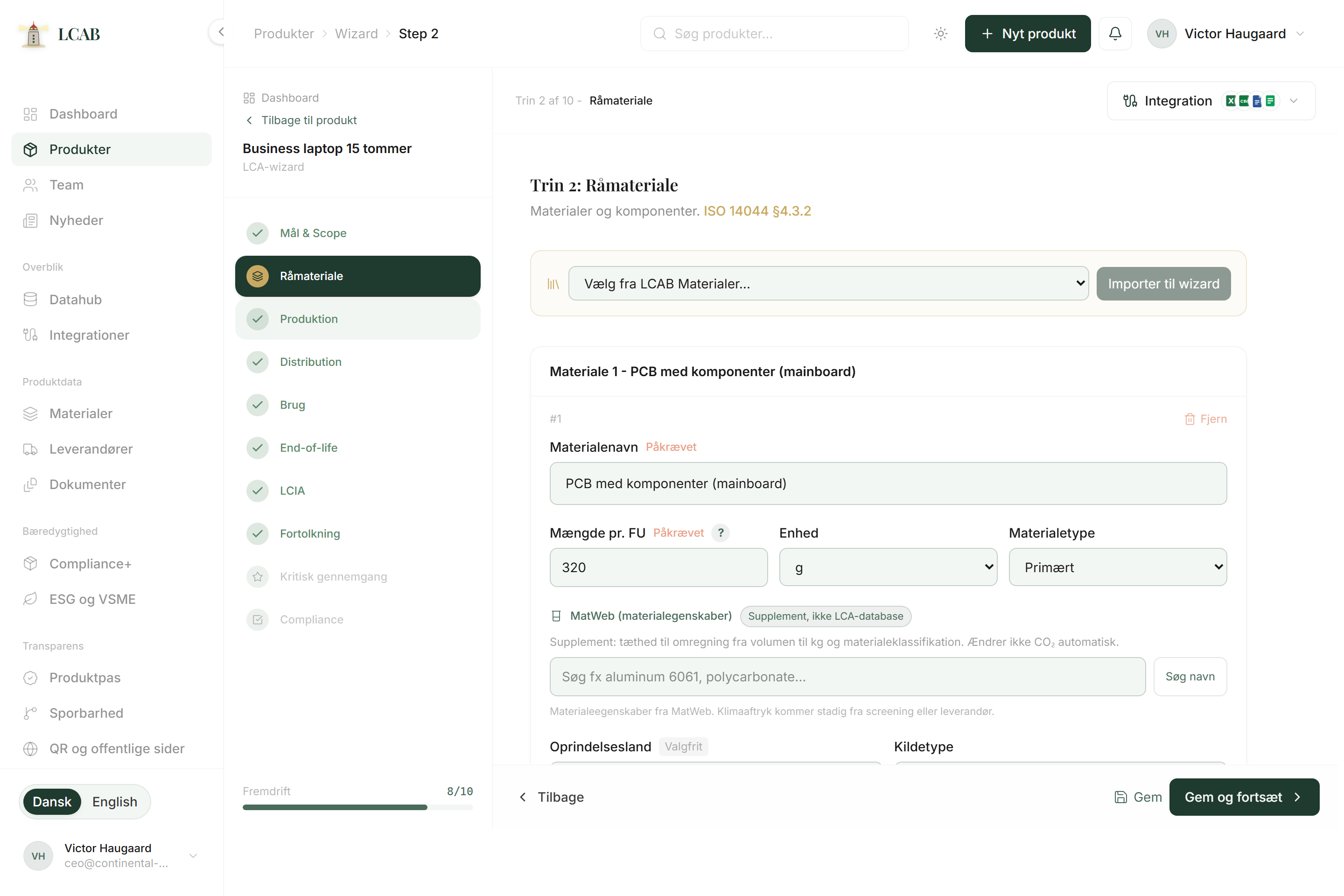
01
Large companies will demand data.
02
Suppliers will need to provide documentation.
03
Customers will ask more questions.
04
And requirements will gradually move further down the value chains.
Why start now?
Most companies will not struggle with the technology.
They will struggle with data. Information is often scattered across:
01
Excel files
02
PDF documents
03
Supplier emails
04
ERP systems
05
Product sheets
06
Internal documents
When requirements arrive, many companies discover they lack structure, overview, and documentation.
That is why companies that start early are often far better prepared. Not because they necessarily do more work.
But because they do the work in time.
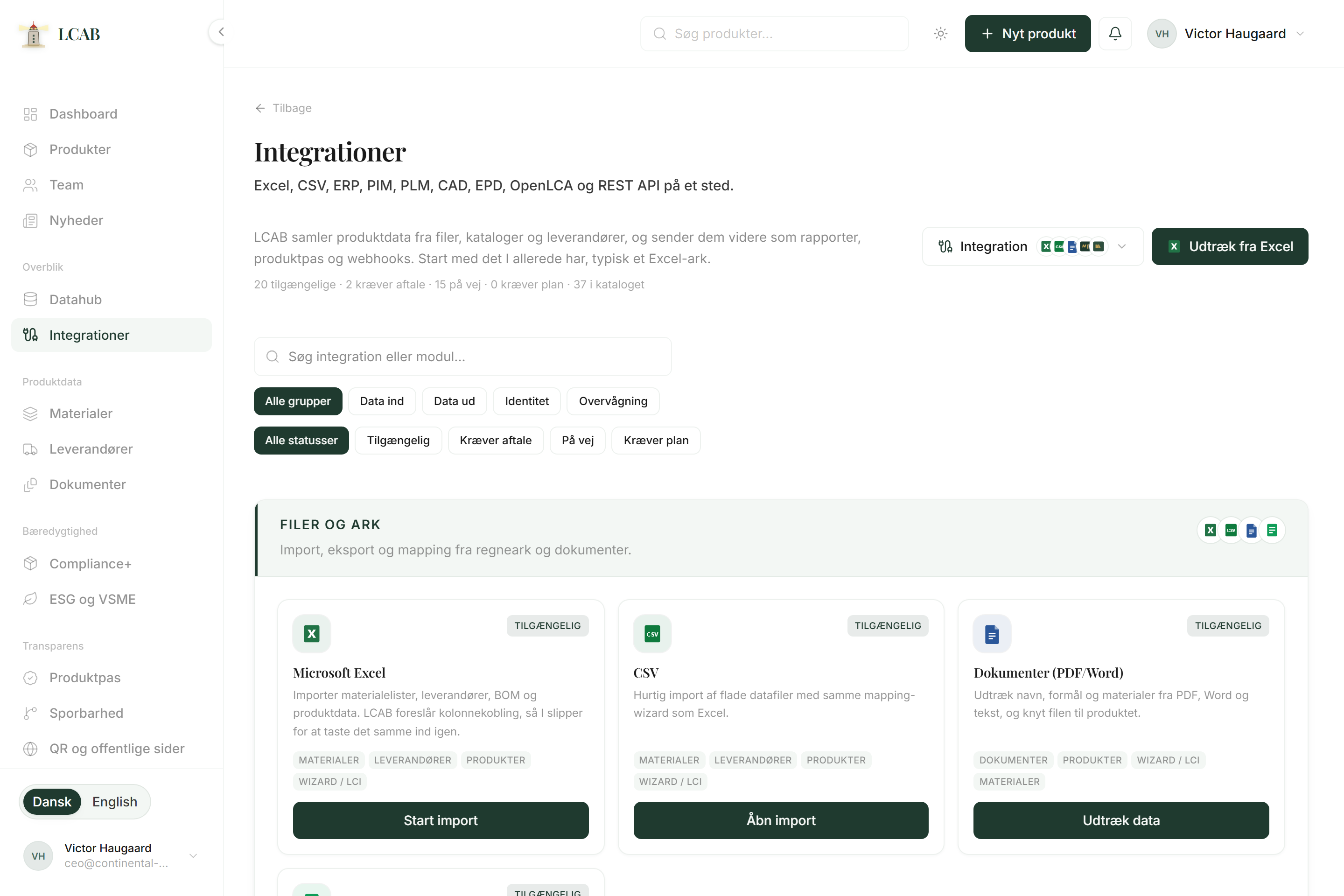
01
Workflows you can follow.
02
Data you can point to.
03
Documentation that hangs together.
04
Tools that make the work easier instead of heavier.
Whether the goal is an LCA, customer documentation, internal analysis, or preparation for coming requirements, the objective is the same:
01
Providing overview.
02
Building trust.
03
And making it easier to make better decisions.
We are not building LCAB because of regulation
We are not building LCAB because companies need yet another system.
We are building LCAB because better decisions start with data you can find and explain.
When companies gain better insight into their products, materials, and processes, it becomes easier to improve them. That creates value for:
01
The company.
02
Customers.
03
And the people who work with the products every single day.
That is the direction we want to contribute to.
Next step
Want to see it on your own products?
Book a walkthrough. We look at your bill of materials and files and show how they land in LCAB.
No commitment. You can start with the demo if you want to see the system first.
No commitment
01