01
Keep product data in one place
Materials, suppliers, documents and environmental data belong to the product. You stop searching folders, inboxes and files named final_new2.
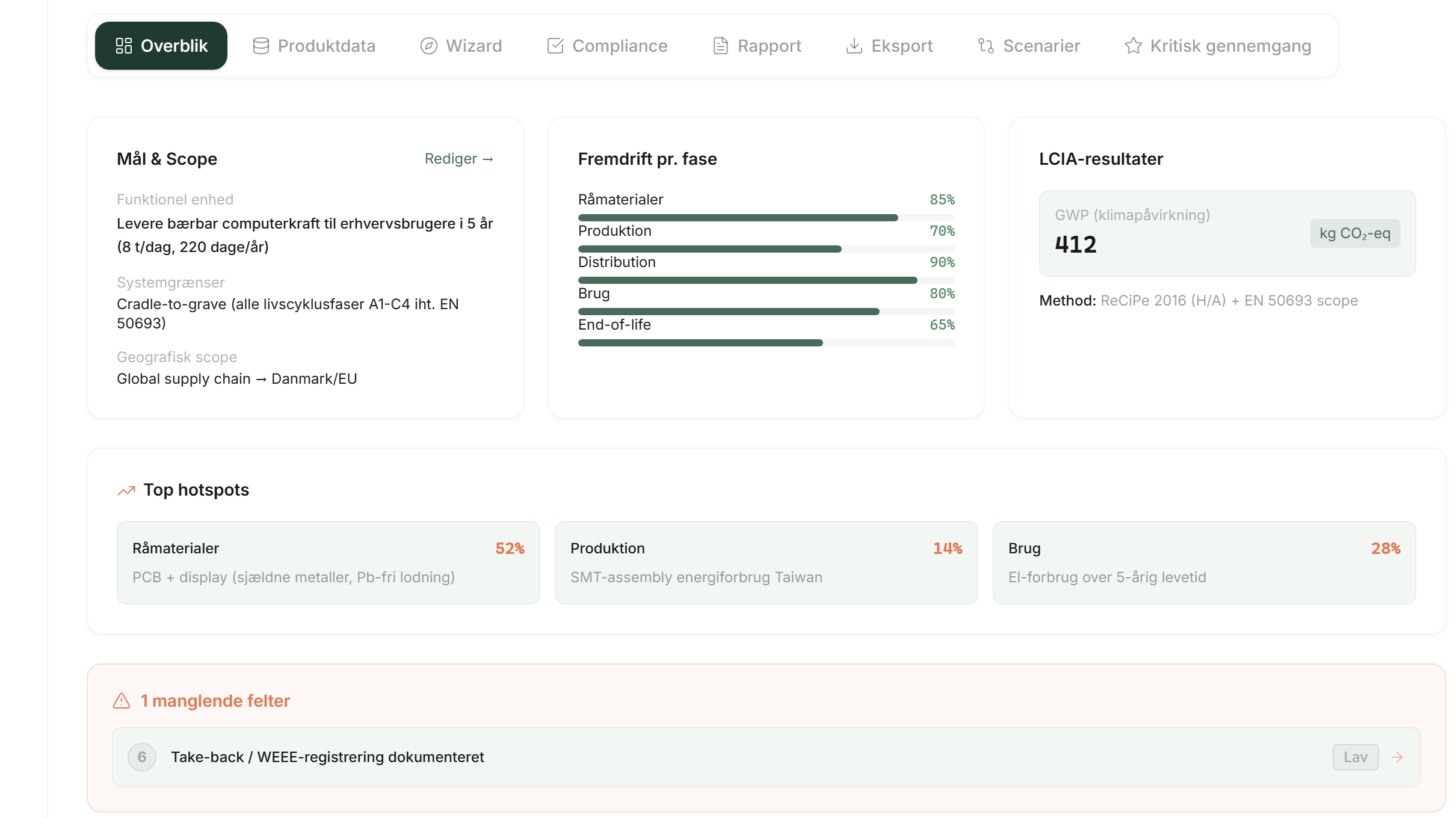
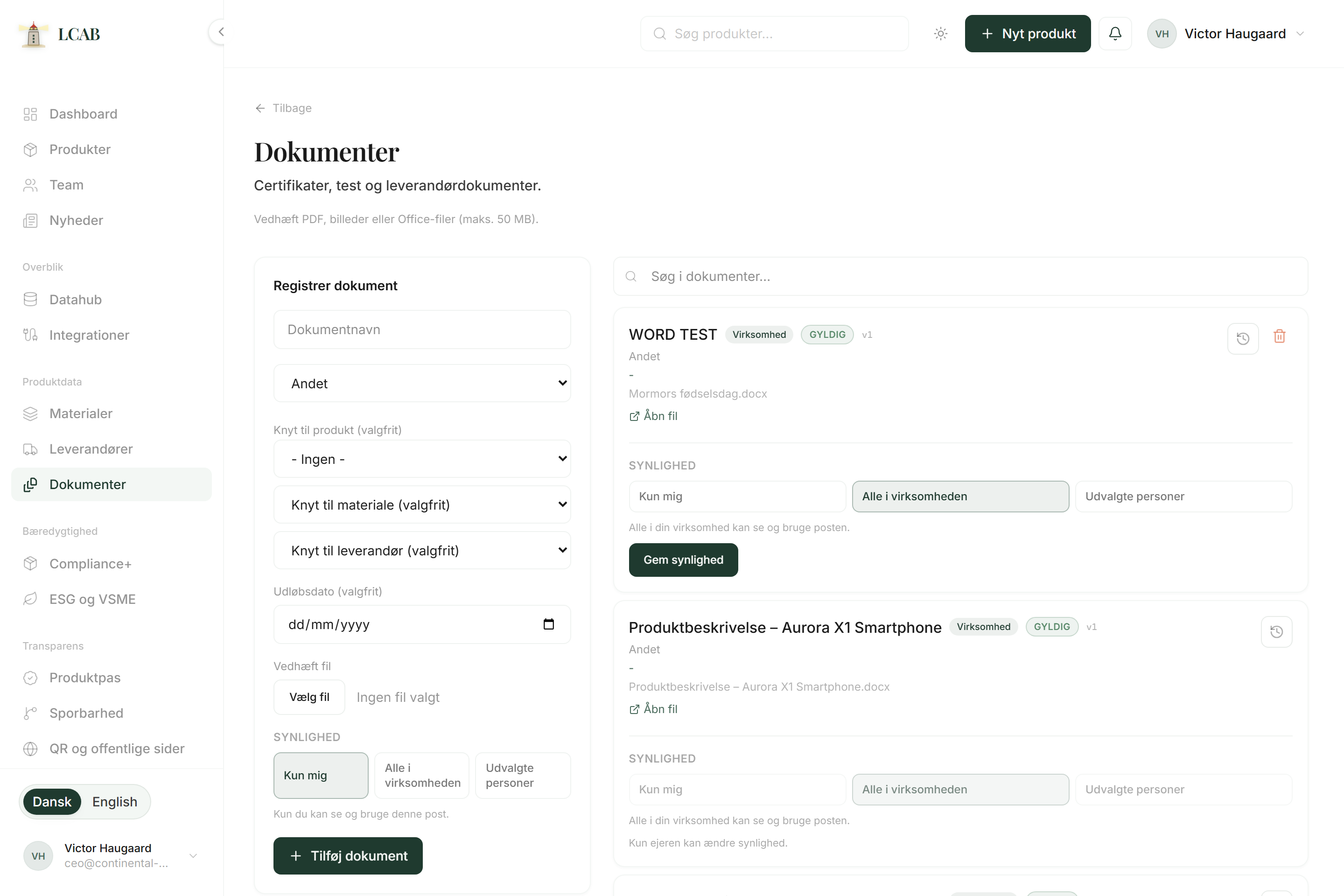
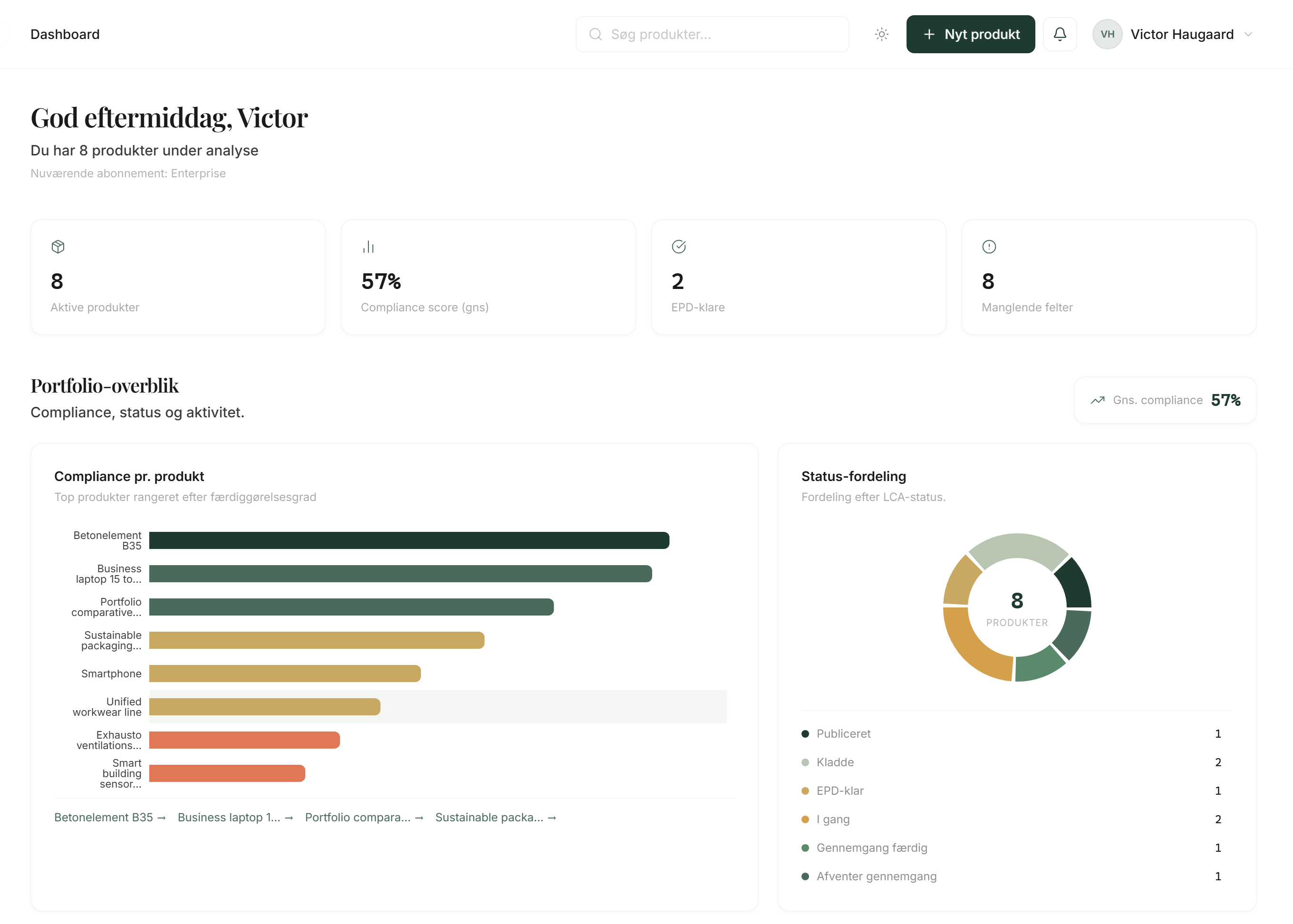
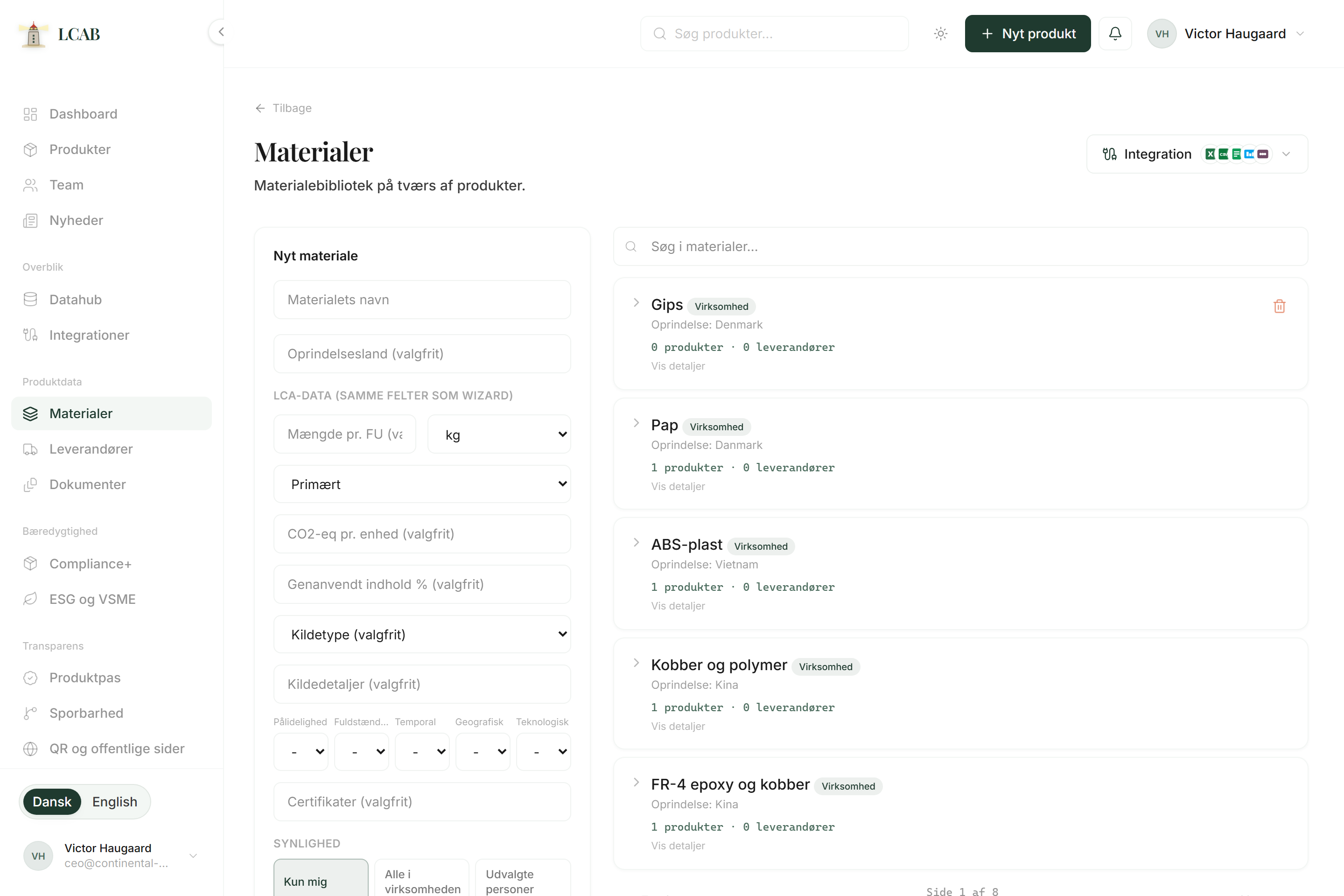
The platform takes in what the company already has. Here is what you can actually do when the customer asks.
01
Materials, suppliers, documents and environmental data belong to the product. You stop searching folders, inboxes and files named final_new2.
02
Import the file you already use. LCAB suggests column mapping, marks gaps, and remembers the setup next time.
03
The wizard follows the international method for life cycle assessment, ISO 14040 and ISO 14044, in business language. You get a draft you can explain, with the data you have entered.
04
When the climate figure is what the customer asks for, you can work with a carbon footprint to ISO 14067. That is GWP, not a full ESG report.
05
Product identity, materials, traceability and environmental data come together, so the passport becomes the next step from what you are already documenting.
06
When purchasing asks about origin, an EPD or gaps in the data, the answer sits on the product. The compliance overview shows what is still missing.
Primary
People who make and sell products without an LCA or ESG team. You do not need LCA training to get started. Start with what you have.
Secondary
They use LCAB as a working tool: shared structure, reuse of materials and suppliers, documentation that hangs together. The platform does not replace professional judgement.
01
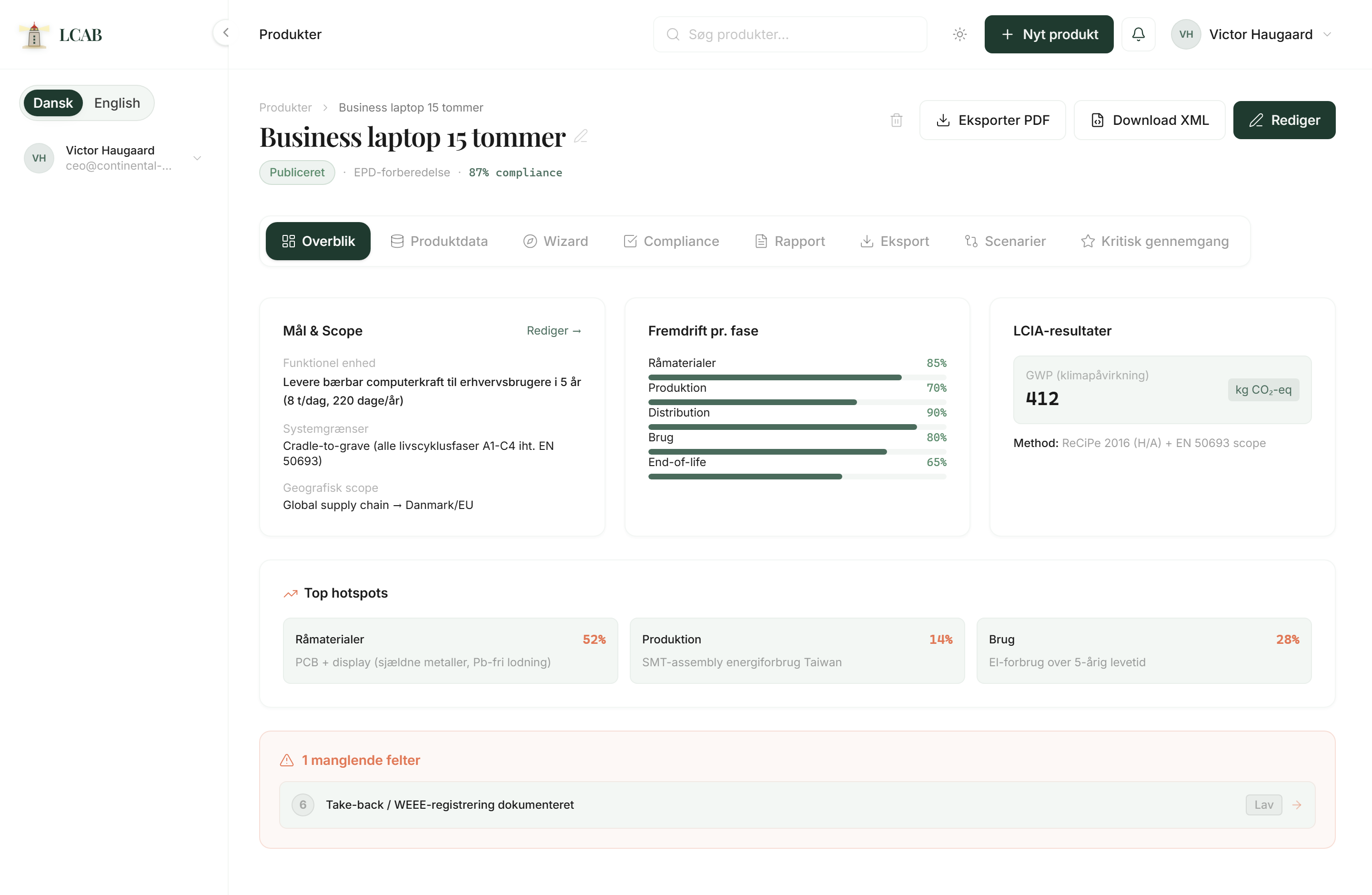
Create products, build the material list, and reuse library records across the portfolio.
02
Excel, CSV and documents. Pick the file, get suggested mapping, and fill fields instead of typing everything again.
03
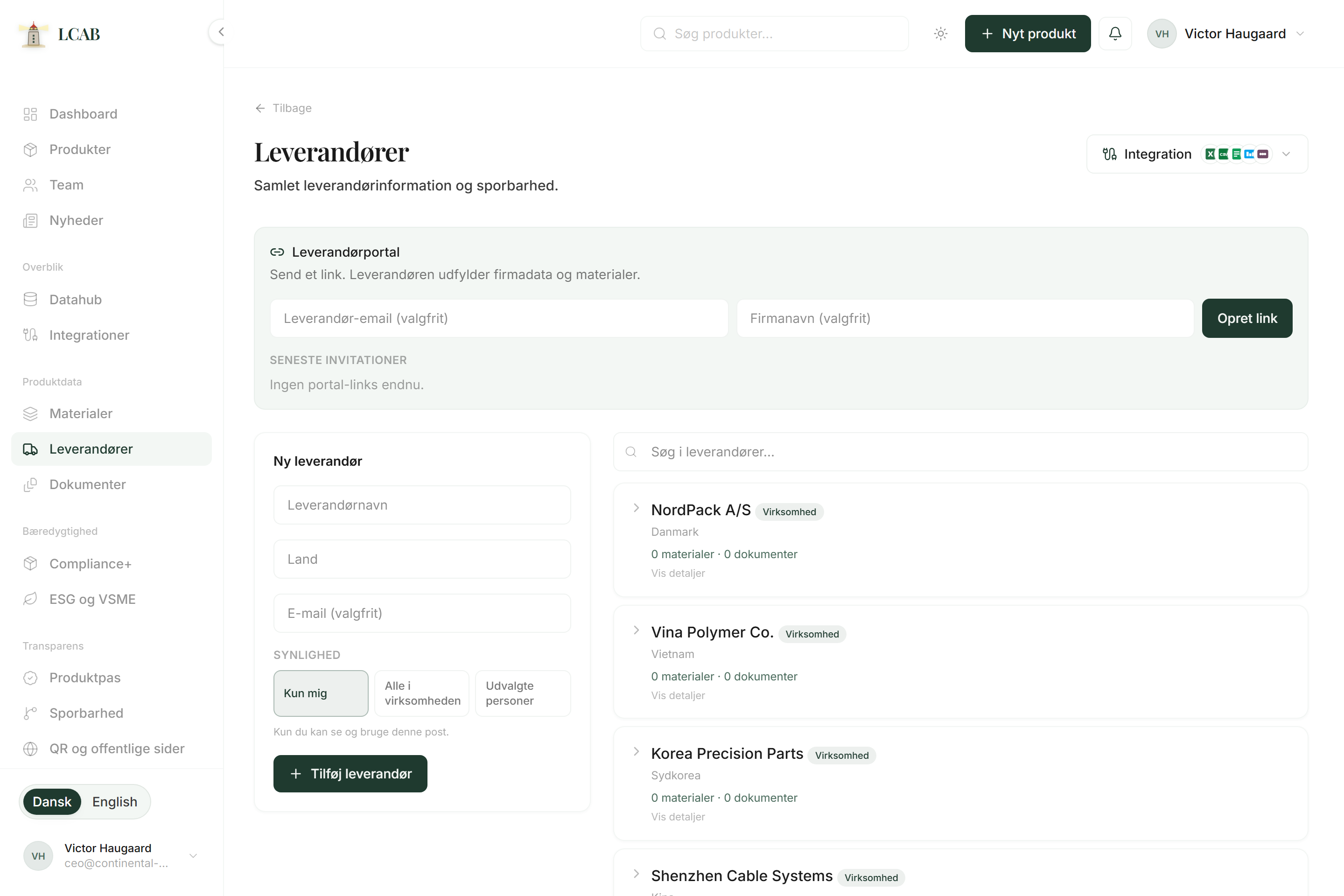
Country, certifications, materials and documents on one card. Send an invite when the supplier should enter the data.
04
A guided flow after ISO 14040 and ISO 14044. Explanations along the way, and visible gaps before you move on to a report.
05
ISO 14067, ISO 14044 report and an EPD-oriented draft. PDF with a document ID, and ILCD+EPD XML for use in other tools.
06
Passport readiness, publishing and the public side of the product: identity, materials, environmental data and traceability.
07
EPD, certificates, tests, REACH or CE sit with the product, material or supplier. The latest file is the one you find.
08
Checklists and score show what is in place. Traceability shows how product, materials, suppliers and documents connect.
09
The LCAB consultant in the app. He can see the page and the products you can access. He does not replace third-party verification.
10
Roles and sharing on the same products. An ESG wizard for what you know about the company. A public seal so a recipient can look up the document ID.
The platform is developed by Windfeld Jensen Co. in Copenhagen.
In LCAB you gather a draft with your own figures, tied to the product. When the customer later needs a stamp from outside, you already have the groundwork.
In LCAB
Next step
A guided platform that gathers product data and documentation
Large modelling studies with a specialist, when you need that
A screening draft you can explain to the customer
An independent review with a third party, when the requirement is there
Product LCA, materials, bill of materials and Digital Product Passport
Building LCA and expert tools such as LCAbyg, SimaPro or OpenLCA
Product data, climate figures, documents and product passport
A full ESG audit or an annual report under CSRD
A data basis you can take to a programme operator
A published, verified EPD
Create the product and describe what it is and what it is for.
Add materials, or import a bill of materials and Excel.
Link suppliers and the documents you already have.
Go through the LCA wizard with what you know, and mark what you lack.
Calculate a carbon footprint when the climate figure is what must be answered.
Generate a report draft and check the gaps in compliance.
Prepare a Digital Product Passport from the same product data.
Share with the team, and let the recipient verify the document ID next to the seal.
Open the demo with sample data, or continue to the product and About us.
Next step
Book a walkthrough. We look at your bill of materials and files and show how they land in LCAB.
No commitment. You can start with the demo if you want to see the system first.
01